
Our approach
Control begins before material moves.
NCRS uses a staged assessment and acceptance pathway for difficult carbon-bearing mining residues. Each stage has a defined decision, boundary and record.
Suitability
The first output is a better-informed decision.
Material is not accepted on description alone. An initial review establishes whether there is enough reliable information to progress and what further evidence may be required.
- 01Source and process history
- 02Current classification and records
- 03Known composition and variability
- 04Packaging, storage and handling
- 05Representative testing evidence
- 06Applicable movement constraints
Decision gates
One pathway. Four accountable stages.
The pathway can stop at any gate if evidence, controls or responsible downstream options do not support progression.
Stage 01
Assess
Review provenance, process history, classification, available analytical evidence and practical handling constraints. The objective is not automatic approval; it is a defensible view of suitability and information gaps.
Stage 02
Accept
Define the declared material, agreed intake conditions, custody records, packaging and responsibilities before any movement. Acceptance applies only to the assessed material and agreed scope.
Stage 03
Transform
Manage accepted material within defined operating, safety and environmental systems. Where included in the agreed scope, post-treatment verification can confirm residual cyanide destruction against the nominated method and reporting basis.
Stage 04
Recover
Assess suitable outputs for responsible downstream recovery or circular reuse pathways, then document material destination and agreed reporting inputs. Outcomes depend on the accepted material and evidence generated; no recovery result is guaranteed in advance.
Chain of custody
The record travels with the material.
A controlled pathway depends on knowing what was assessed, what was accepted and whether the material presented remains consistent with that basis.
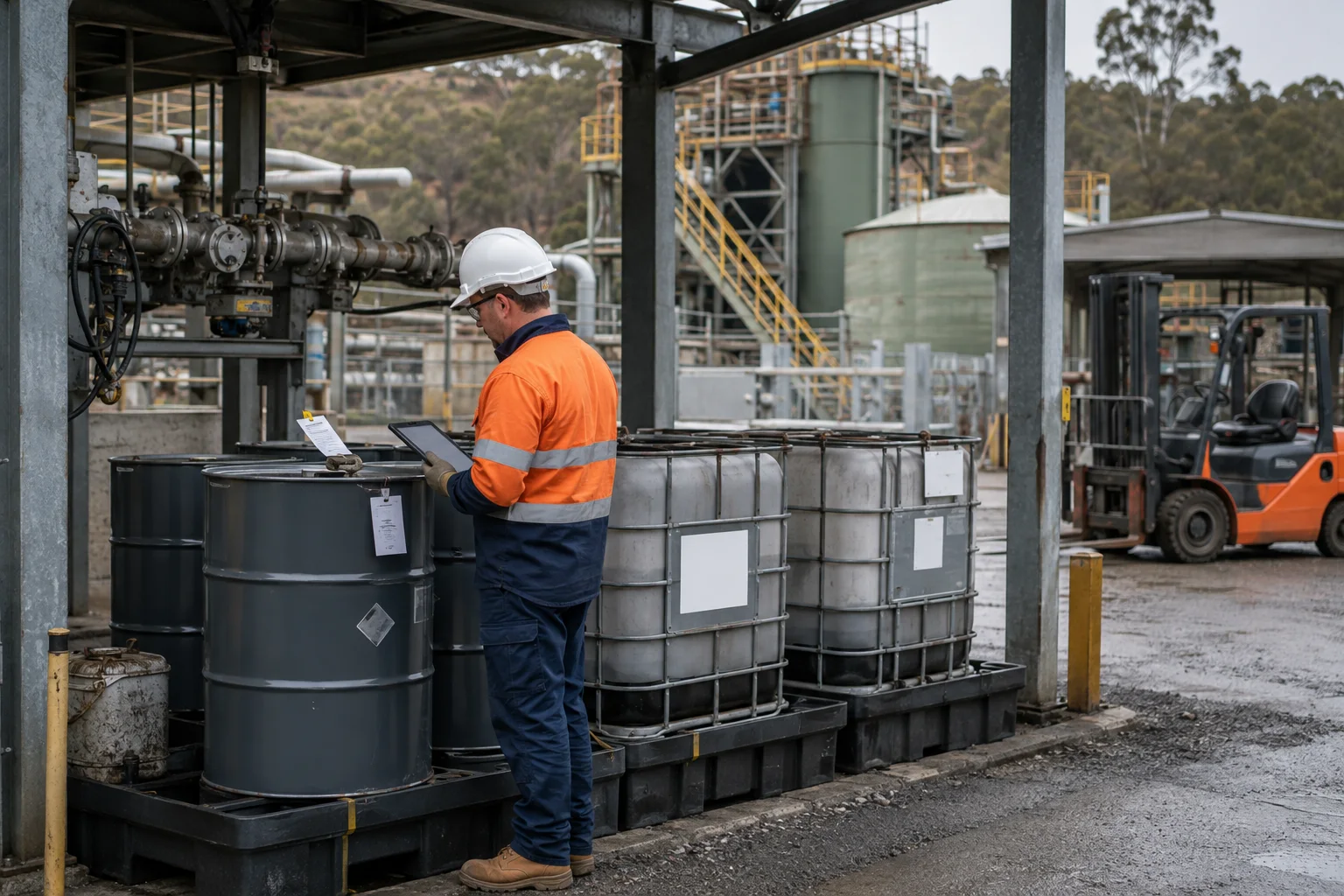
Documentation requirements are determined case by case. They can include source records, material descriptions, representative evidence, packaging and movement records, agreed variances, treatment records, verification results and a documented handover.
Agreed project outputs can also include material, energy and emissions data inputs for environmental and ESG reporting. NCRS does not provide independent assurance over customer disclosures.
A necessary boundary
Assessment is not acceptance.
Every material and proposed pathway is considered on its own facts. An enquiry, document review or sample discussion does not constitute material acceptance, a transport instruction, regulatory approval, a processing commitment or a guarantee of recovery.
Commercial activity proceeds only under separately agreed written terms after technical, operational, safety and compliance requirements have been addressed.
Initial assessment
Is there enough evidence to take the next step?
Begin with a high-level description of the material and your objective. Sensitive records can move to an agreed confidential channel later.